
One Advocate, 20 Proclamations: Celebrating Mike Sciandra’s Work to Promote Year-Round Problem Gambling Awareness
Trigger Warning: The following content contains descriptions of underage gambling and gambling addiction, which may be distressing for some individuals.
Even as Problem Gambling Awareness Month (PGAM) 2026 draws to a close, its impact extends far beyond the month of March. For many NCPG Affiliates, Members, and Partners, awareness efforts continue year-round, building on the visibility of PGAM to support treatment, prevention, and recovery in their communities.
Planting Seeds for PGAM Proclamations
For Mike Sciandra, Executive Director of the Nebraska Council on Problem Gambling, March was an opportunity to reap the results of a one-man, grassroots awareness campaign sowed long before PGAM and, in some cases, before 2026 began.
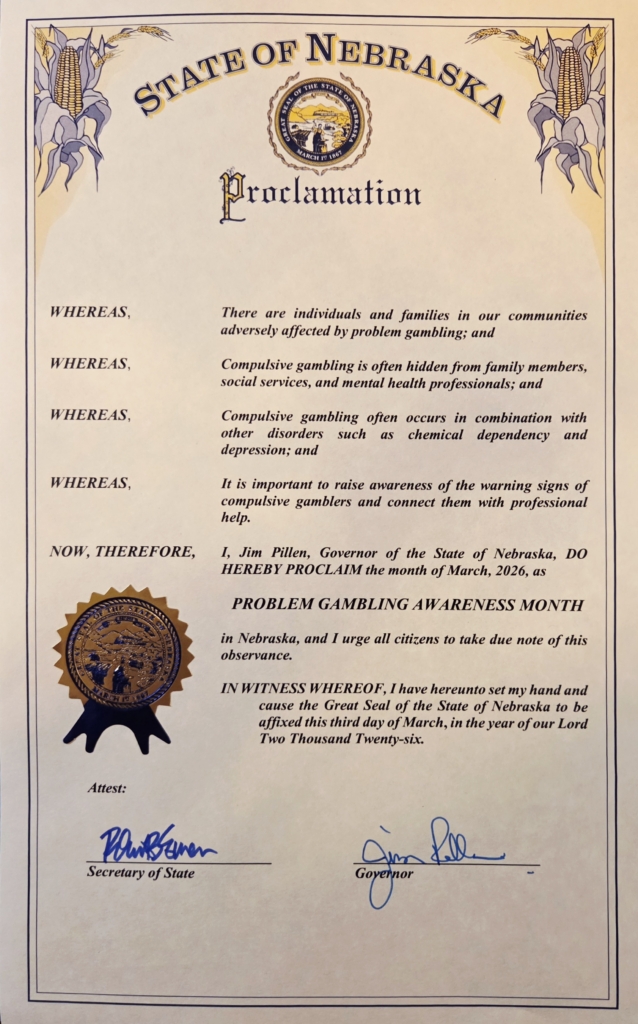
Those results? 20 official PGAM proclamations from both the state of Nebraska and, as Mike proudly describes, “50% of the population of the rest of the state.”
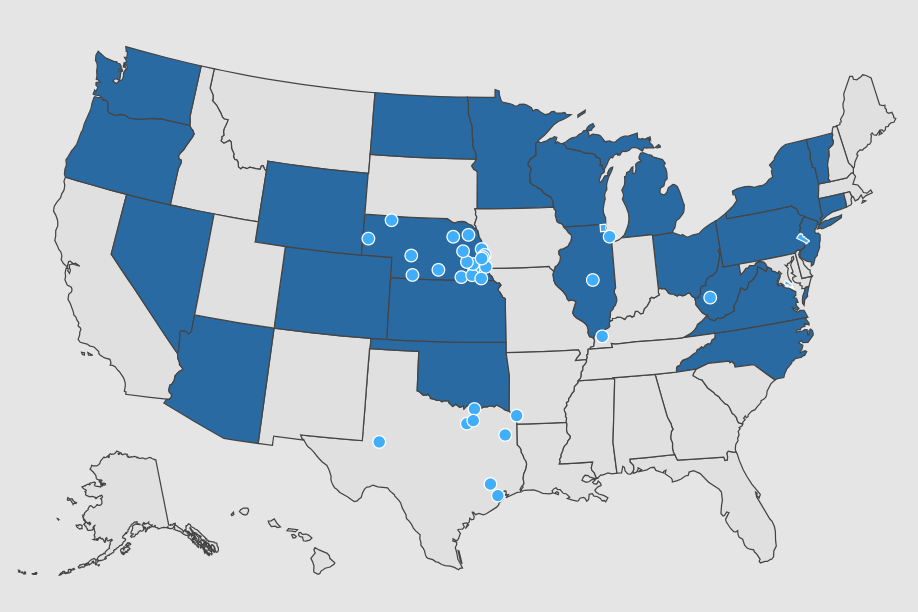
Mike is no stranger to requesting PGAM proclamations. For nearly five years, he led efforts to receive a proclamation from Nebraska’s Governor, officially marking the month of March as Problem Gambling Awareness Month. But this year, as the incoming Executive Director of the Nebraska Council, was different.
“We really didn’t have any sort of concerted effort prior to this year,” Mike admits. “ This year, I really ramped it up a notch and went statewide with my ask.”
Most advocacy and awareness organizations would be overjoyed to receive an official state proclamation from the Governor. Several NCPG Affiliates and partner organizations apply for and receive a proclamation every year. If a state proclamation isn’t possible for some reason, proclamations from large cities or counties are often the next step.
This “top down” approach is important, as is the typical grassroots approach of “bottom up.” To Mike, it isn’t an either / or decision. In 2026, he chose both: Shaking hands with the governor and, later that same week, speaking at a smalltown council meeting.
For some of those cities, Mike’s presence – and his lived experience – is their very first introduction to problem gambling.
The Role of Lived Experience in Advocacy and Awareness
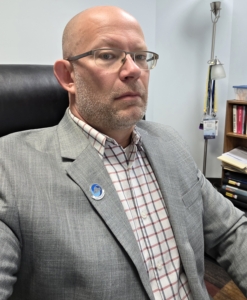
Mike began gambling when he was nine years old. He grew up with a family of “addiction, incarcerations, and chaos in general.” After struggling for 25 years with his gambling behavior, something changed.
“I hit what you could call my rock bottom,” he says. “But I always joke that I never hit rock bottom because I always carried a shovel with me.”
Mike eventually received free treatment through the Nebraska Gamblers Assistance Program, which sparked a new desire to give back to the field that helped him. After working in treatment for several years, he stepped into the role of Executive Director of the Nebraska Council in March of 2025.
“It all comes back to my lived experience,” Mike explains. “I wanted others to never feel the same way that I did – living with stigma and without hope for so long.”
That passion drove him to continue his work in Nebraska, promoting awareness of resources in soup kitchens, homeless shelters, and treatment centers. It also prompted him to pursue one of the most visible ways of spreading a message: requesting city and statewide proclamations for Problem Gambling Awareness Month.
 |
Proclamation Requests: Mike’s Tips
When it comes to requesting a proclamation, Mike’s most important tip is to start early. “Be as strategic as possible, that way you aren’t rushing or feeling overwhelmed at the end,” Mike insists. “The more planning you can do ahead of time – I’m talking in December and January – the less hectic it’ll seem in February and March.” In Nebraska, Mike began preparations as early as late 2025. Most proclamations need to be submitted at least 30 to 60 days ahead of time to be accepted. If starting even earlier than that, Mike suggests using sample language from previous NCPG PGAM toolkits and adding in minor edits later. However, the process often depends on the size of the city. |
|
After submitting a proclamation request, Mike suggests being braced for a common line of questioning. “Most of the questions I get are around neutrality and if we’re anti-gambling,” Mike says. He explains NCPG’s neutral stance on gambling and how that translates to his work in Nebraska. “I’m working with a lot of communities that have legal gambling options within them. A lot of time, they’re questioning whether I’m coming in to just to try to shut them down. I explain this to everyone — I’m not anti-gambling, I’m anti-gambling related harm. That usually quells any sort of concerns they might have.” |
|
| Cities, Counties, and States
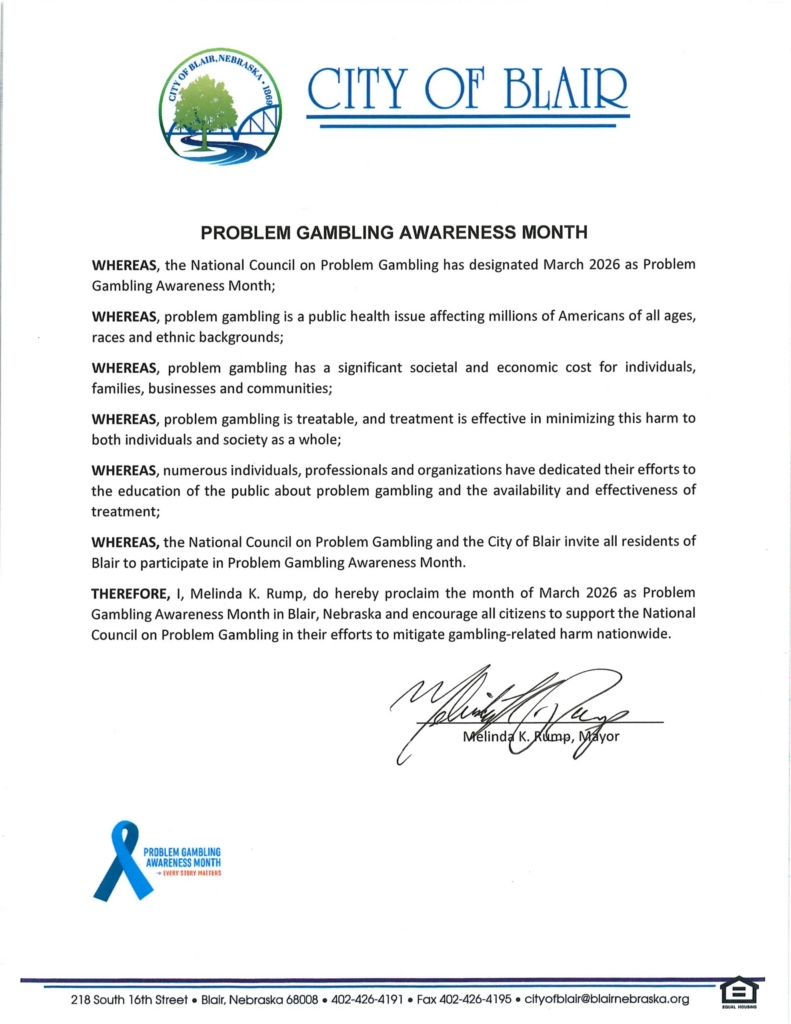
“Nebraska is the type of state where people can get very focused on Lincoln and Omaha,” Mike explains. “I want to make sure the rest of greater Nebraska is receiving the same attention as the rest of the state. Everybody deserves to have this information.” For smaller communities, Mike often travels to speak at city council meetings, discussing his proclamation request and, by proxy, spreading awareness of services in their area. “I grew up in a small town myself, and never in a thousand years did I realize that there were treatment services out there,” Mike admits. “Just hearing about those resources would have been something that could have helped me sooner.” Mike receives phone calls from city council members once or twice a week. Most are curious about the purpose of the proclamation. Mike welcomes those calls. “It’s a great time to answer questions,” he concludes. |
 |
|
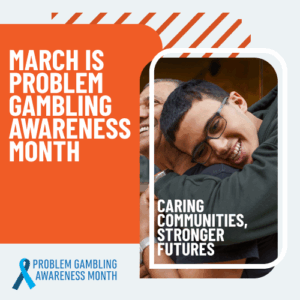
Caring Communities, Stronger Futures
To Mike, community is vital in building awareness. It encompasses a variety of smaller communities: treatment professionals, non-clinician populations, peer support, operators, recovery groups, and more. Making those individual communities feel like they’re a part of PGAM is essential. “It truly comes down to building relationships. At the end of the day, you’re not going to put out every fire,” Mike says. “You’re not going to be able to solve every problem overnight, nor do I believe that I’m ever going to solve every concern or fix everything.” But with more awareness comes a stronger future. When asked what comes after awareness, Mike has a poignant answer. “You can’t fix an issue that people are not aware of.” |
| Proclamations as Community Celebration
Ahead of PGAM 2027, the Nebraska Council is aiming to receive even more proclamations than years prior, including the current one. “I would like to get every city in the state,” Mike admits. This year’s success has inspired him to continue introducing himself to new communities and building relationships that go beyond marking PGAM. An important part of reducing stigma, to him, is continuing to remain positive about PGAM. While gambling addiction has negative consequences, spreading awareness also requires reframing. “ The fact that we’re willing to talk about it, we’re willing to acknowledge it, we’re willing to do something about it,” Mike says. “That deserves celebration in itself.” |
 |
 |
Closing Thoughts
“Every little bit helps,” Mike concludes. “If it’s not your full-time role or you’re not comfortable with doing this level of advocacy, that’s okay. Do what you’re comfortable with doing. But if you break it up and you’re strategic about what you’re doing, even making one new connection a week or one new connection a month, or whatever that might look like, it matters.” Building on the previous discussion of community celebration, Mike elaborates. “People like to celebrate their local communities, and I think that’s something to consider when we’re going after these cities. As far as proclamations go, people like celebrating the work that they’re doing in their communities. They like it when people from outside of their community come in and recognize that too.” Despite having achieved a record-breaking number of proclamations, Mike’s advice goes beyond just PGAM.
|
For questions contact
Julia Brunson
juliab@ncpgambling.org
